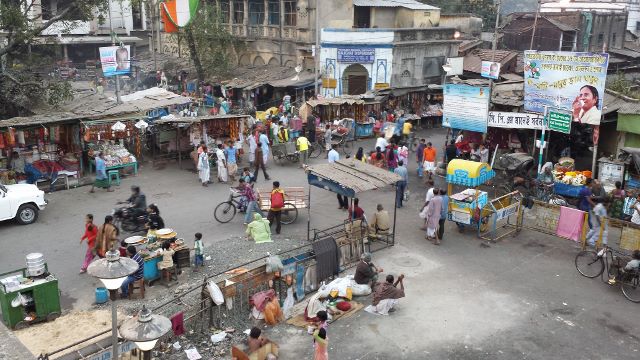
 Although I regret highlighting one of the things India is least proud of when describing it to potential future visitors, the poverty left the biggest impression of me. In Kolkata, I visited mostly impoverished areas, so have a skewed impression of the country, but one that will stick with me, thanks to the different types of beggars, offering various incentives for feeding their requests for money:
- Window tappers
The first beggars I encountered tapped on my taxi widow. They were dressed in soot-covered, tattered rags and usually carrying tin cans of coins which they rattled. Since the traffic in Mumbai and Kolkata is thicker than split pea soup (a food safe for travelers since it is cooked!), the beggars situate themselves on street corners and tap on the windows of drivers and passengers, especially in airport areas.
This type of beggar does not usually offer any form of exchange in terms of goods or services but stakes their life on the pure pathos of passersby and the goodwill of drivers for not crushing them.
2. Gollum
The only beggar I fed and did not immediately regret interacting with looked like “Gollum” from “Lord of the Rings.” It was difficult not to get mesmerized by his swaying, tiger-like gait as he approached me on all fours. I don’t know what disabled him from walking, but he used his knuckles to support the upper half of his body. The tiny man’s face was thin with a tuft of untamed hair on top. His body was mostly naked and covered in dirt, though he probably bathed it in street water like the others. Thin skin covered his tiny bones and I noticed the delicacy of his fingertips as he reached his palm up toward my hip when I was buying water from a corner shop. I was worried I’d break them if I put anything in his palm.
I gave Gollum a bag of opened chips, which I bought with the water. The shop owner glared at me for leaving a swatter in front of his window, but I did not regret my action. I’d learned that it is important to open food before giving it to beggars to ensure that they eat it and don’t sell it back to the shops or give it to their pimps for drug money. I don’t think Gollum would’ve made it far enough to be able to share any food given to him anyway.
3. Ladies of Sudder St.
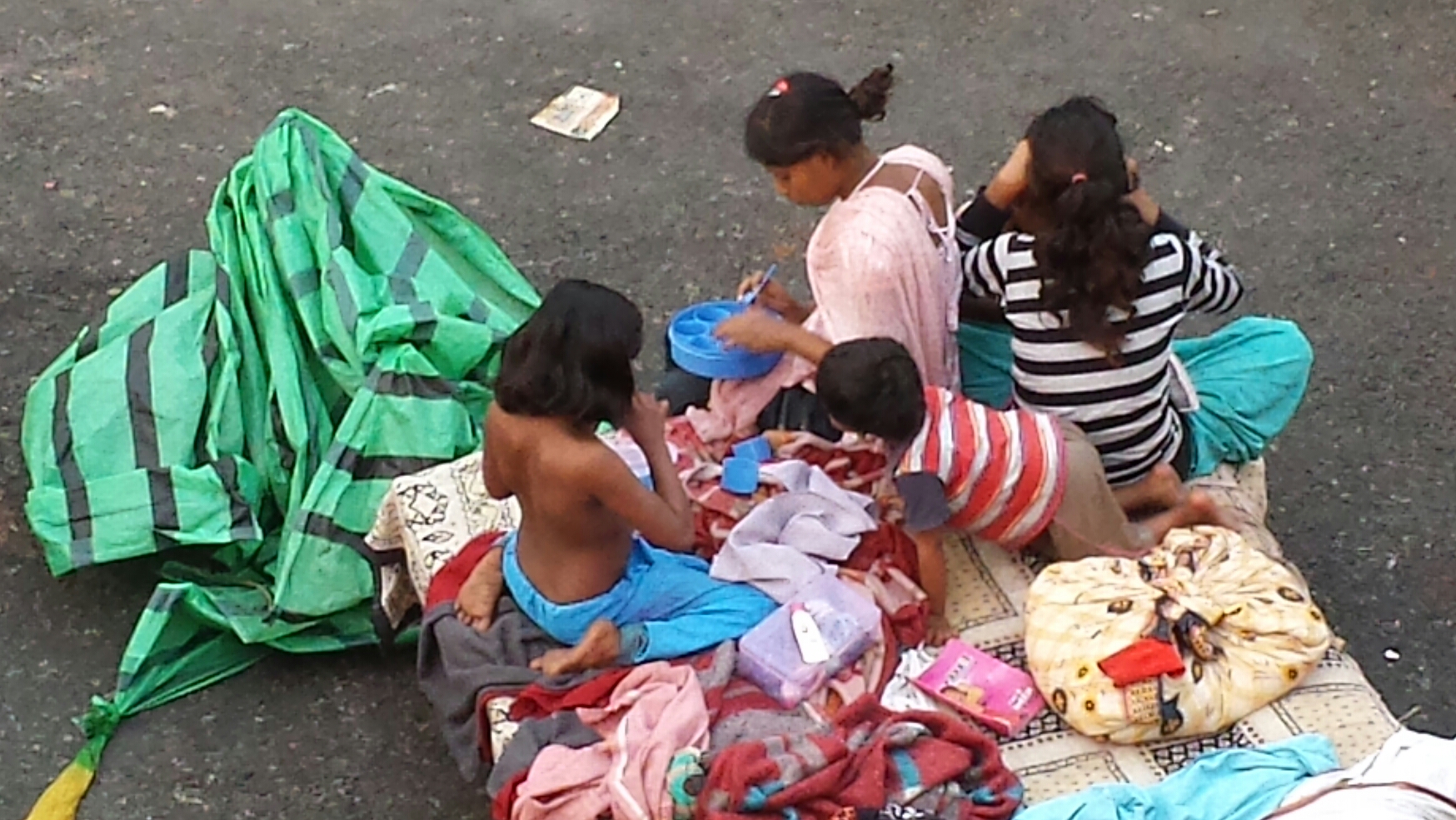
As described in a previous post (“Let them Eat Silk”), the ladies of Sudder Street are seasoned beggars. They can sense vulnerability and use their well-developed skills to entice naïve travelers with good intentions. They are poor grown-up children stuck in a dizzying wheel of drug prostitution.
4. Man carrying Man Cart
The unregulated services and goods far exceed the regulated ones (in the places I visited) in India. One of the most visible is that of men offering various modes of transportation. For a directionally-challenged traveler, these services are very tempting.
In Kolkata, the main modes of unregulated transport include rickshaws (tiny, three-wheels vehicles powered by men on bicycle seats of varying strength), auto-rickshaws (electricity-powered rickshaws), cabs, horse-drawn carts, and busses. There was one mode of transport which I found particularly demeaning, though. This is that of men who run, carrying people behind them by pulling a wheel-barrow-like cart on which the passengers sit. It is back-breaking work, and one can literally see the ridges of the spines of the “drivers.”
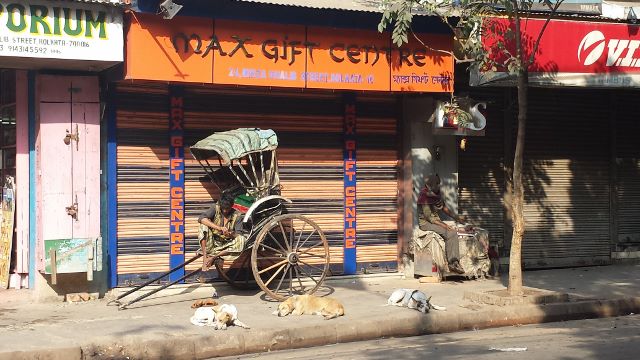
One morning, I found myself lost in the middle of a tangle of unpaved roads. It was about 6:30am, so the sun was only just peaking between the shambled buildings hugging the road. “Motherhouse?” a man called to me, asking if I was headed toward the exact destination I was trying to find. Noone in India speaks under a yell, so his shout startled me.
I sighed, relieved, “How much to take me there?”
“50 rupees.” (which is about 80₵)
I guessed he was grossly overcharging me, but I did not care.
“Yes! Can you walk with me?”
He nodded, looking as if he’d won a contest. I did not care to begin my day bartering with a man who literally carried the weight of rich people on his back.
He pointed to the seat, gesturing for me to sit on it.
“No,” I said, “You,” I pointed to him, “walk with me.” I made two legs out of my fingers and walked across my palm before pointing to myself.
He looked puzzled.
“I want you to walk with me,” I tried again, “No cart. 50 rupees I still give you.”
I started walking forward and motioned to him to join. “Motherhouse!” I asserted, “You walk me there.”
He pointed across a different road, picked up his cart and dragged it behind him.
I was glad I’d hired him. I clearly needed a guide.
It was only about a 10 minute walk to Motherhouse with lots of stares from the shop owners and street bathers. I thought about asking him to sit in the cart and trying to drag him there myself, but knew that my language would only cause more confusion. I wanted to know what it would feel like to be a workhorse.
When we reached Motherhouse, I gave him 60 rupees (laughing after his request for 100).
“Thank you!” I called behind me as I entered the convent, feeling as triumphant as his face looked.
5. Balloon babies
The most disturbing image of poverty in Kolkata comes out at dusk. Children between the ages of three and five line the streets in tourist areas with balloons. When they see anyone who looks like a foreigner, they chase after them, rub their tummies and beg them to buy balloons with their very high, angelic voices. It is painful to walk by them, but helps to remember that the money they earn goes toward glue for sniffing.
6. Child Labor Shop
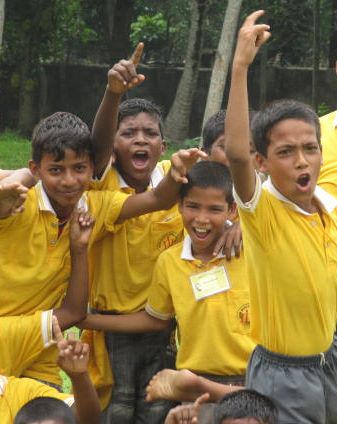 The alternative to supporting the drug-sniffing “caregivers” of balloon babies is donating to child labor shops. Most of the items I purchased to take home to friends were purchased in one such shop, named after Don Bosco, which claims to feed the bank accounts of the orphan children once they reach a certain age. Orphans, of which there are thousands in Kolkata, are taken from their sites of abandonment and given shelter, education and trade skills. They then go on to create incredible textile, jewelry and other gift items tourists can purchase. The lady working in the empty shop I came across spoke with me for over an hour about her voluntary work, training the children, and the beautiful things they made.