By Josiah Beharry, Graduate Student Researcher, Center for the Humanities, UC Merced
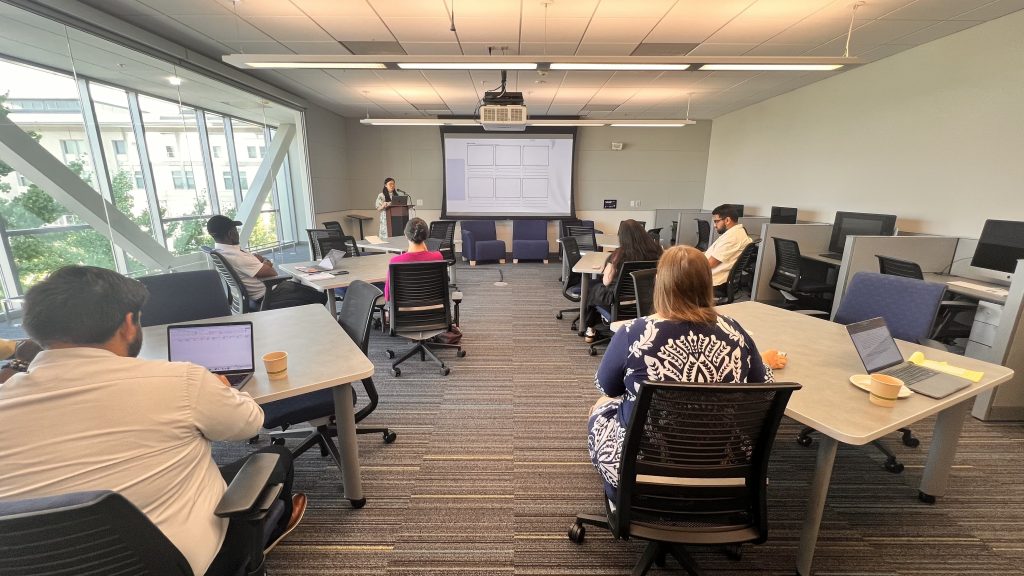
The Center for the Humanities opened the academic year with the first event in this year’s capacity-building workshops, which are designed to bring fresh energy and vital tools to campus. “Making Videos to Showcase Your Research: Create, Edit, Share,” led by Staff Research Associate Man Zhang, set the stage for what will be a year of conversations that blend creativity with scholarship. More than a technical workshop, it marked the beginning of a series committed to expanding how research lives in public — not just written on the page, but shared, seen, and understood.
The gathering drew graduate students and faculty into a shared experiment. At its center was a simple but radical question: what happens when scholars treat video not as an afterthought but as a primary language of communication? Zhang’s instruction moved through practical terrain: storyboarding, camera movement, audio clarity, editing software, but the resonance was larger. The message was that research, often confined to conferences and journals, gains new life when framed visually. A well-crafted clip can transform a poster into an experience, extend a presentation beyond the room, and bring local projects to global audiences.
Equally important was the emphasis on accessibility. Zhang highlighted the use of subtitles, concise formatting, and clear audio as non-negotiables, not extras. These choices make research videos not only professional but democratic, reaching audiences across languages, backgrounds, and abilities. In an era when information moves at the speed of a swipe, these practices ensure that academic knowledge keeps pace without leaving people behind.
For a university community in the Central Valley where visibility, representation, and access remain urgent, the implications are profound. Videos created here can circulate far beyond campus walls: introducing first-generation students to research culture, connecting with policymakers who may never read an academic paper, or amplifying work that might otherwise remain hidden in archives.
Workshops like this do more than teach technique; they invite scholars to see themselves as translators of knowledge. The medium of video demands clarity without sacrificing complexity, accessibility without diminishing rigor.
The Center’s capacity-building workshops promise not just guest speakers but access to new tools for a scholarly community committed to breaking barriers: between disciplines, between campus and public, between research and the world it hopes to change.
The workshop closed with participants imagining where these skills might lead: drone footage of fieldwork, short explainers that travel across social media, digital archives that students and families can access from anywhere. The possibilities are expansive, and so is the charge. Scholarship, after all, is not just about producing knowledge. It is about making it matter.