
By: Josiah Beharry, Graduate Student Researcher, Center for Humanities, University of California Merced
In recent years, there has been growing scholarly and literary attention to memoir, refugee narrative, intergenerational memory, and the politics of telling lives that have been neglected by official history. Within that broader turn, Kao Kalia Yang’s Where Rivers Part: A Story of My Mother’s Life arrives as an especially important text because it does not simply recount migration or survival; it examines how a life shaped by war, displacement, kinship, and silence can be narrated at all. The book speaks to ongoing conversations about memory, diaspora, and the limits of historical documentation, particularly for communities whose stories have often been preserved through oral tradition rather than state archives. As such, it deserves attention not only as a moving memoir, but also as a significant contribution to broader debates about whose lives become legible in literature and history.
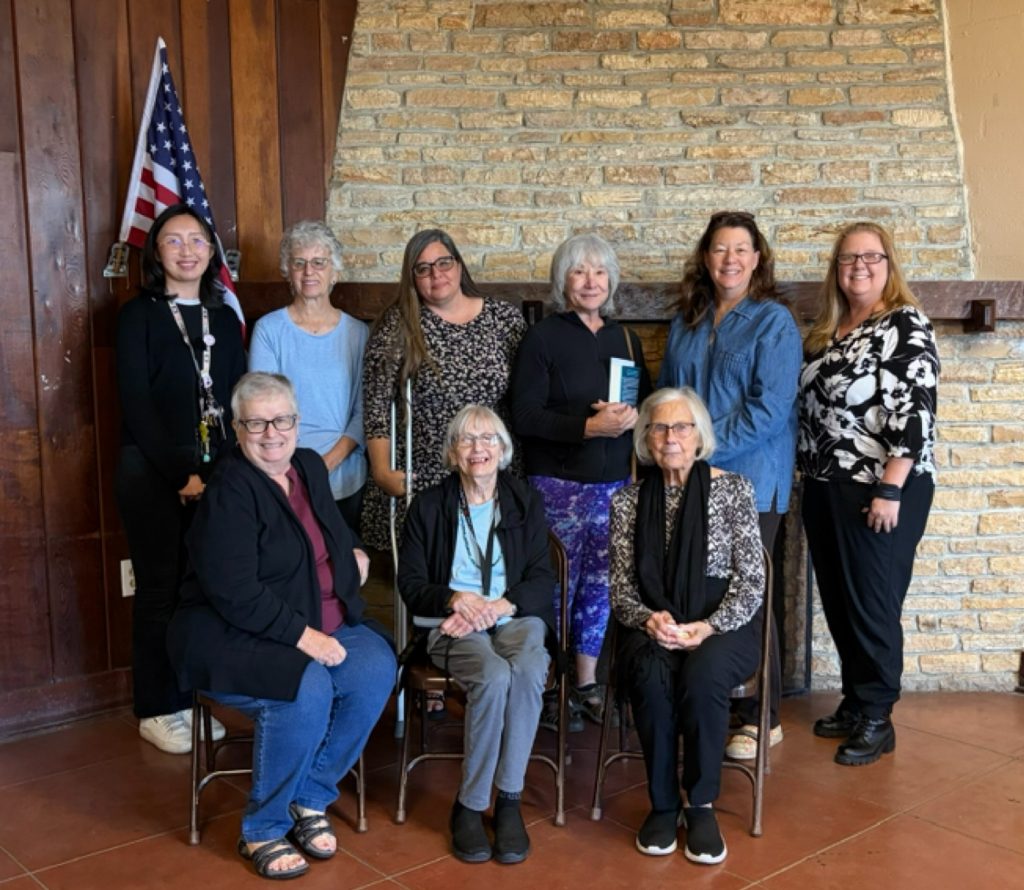
Kao Kalia Yang’s Where Rivers Part, the selection for our county-wide Common Read, a collaboration between our Center for the Humanities and the Merced County Library
At its core, the book belongs to a larger body of work concerned with migration, maternal history, and the relationship between personal memory and collective trauma. Yang’s memoir can be placed within conversations about refugee studies, Asian American literature, women’s life writing, and the politics of cultural memory. What distinguishes the book is its insistence that the life of a Hmong mother is not peripheral material. In this sense, the book pushes against dominant narrative conventions that often privilege major events over intimate life worlds. It demonstrates that historical violence is most powerfully understood not only through battles and borders, but through mothers, daughters, family structures, and the everyday labor of survival.
The story itself unfolds as an act of reconstruction. Rather than presenting a straightforward biography of her mother, Yang pieces together a life through memory, family history, inherited story, and reflective narration. Her mother emerges as the emotional center of the book. a woman shaped by early hardship, war, migration, and family obligation, yet never reduced to a flat symbol of resilience. One of the book’s greatest strengths is that Yang allows her mother to remain fully human—strong, burdened, tender, exhausted, and at times unknowable. She is not turned into a saintly figure, nor is she simplified into a trope of suffering.
The surrounding characters deepen this portrait. Family members appear as part of the social and historical world that has formed the mother’s life. Their presence reinforces the idea that identity is never individual, but communal, inherited, and relational. The family structure itself becomes one of the memoir’s key subjects. Yang shows how displacement reorganizes roles, responsibilities, silences, and attachments within the home. The result is a narrative in which character is inseparable from history.
The book’s major contribution lies in its treatment of memory as incomplete, fragile, and ethically complex. Yang does not pretend to have full access to her mother’s life. Instead, she foregrounds the gaps in what can be known. This is one of the memoir’s most compelling formal and theoretical strengths. The fragmented structure is an argument about remembrance itself: some lives come down to us in pieces, and to write them honestly requires acknowledging fracture rather than smoothing it over, a deep reflection on how trauma operates in our brain and body. In this way, the book offers a useful conceptual lesson for readers beyond literary studies. It models a form of trauma somatics that is accountable to uncertainty, forgetting, and that understands narration as an act of remembering and imperfection.
For readers interested in broader intellectual questions, the book is especially valuable for what it reveals about history from below. It asks what happens when the center of the story is not the state, the war strategist, or the official archive, but a mother whose life has carried the consequences of those forces. Its theoretical payoff lies in this shift of perspective. Yang demonstrates that intimate life is where political history is most deeply lived. That insight gives the book significance beyond its immediate subject matter.
Stylistically, the memoir’s greatest strength is its prose. Yang writes with restraint and clarity, allowing the emotional force of the material to emerge through detail rather than exaggeration. The language is lyrical without becoming ornamental. Equally strong is the book’s refusal of narrative neatness. This quality may also present a challenge for some readers. Those expecting a tightly linear or conventionally biographical structure may find the text diffuse at times. Because the memoir is shaped by fragments, reflection, and emotional accumulation, it does not always move with the sharp progression some readers may prefer. Still, this is less a flaw than a formal choice consistent with the book’s subject. If the narrative occasionally resists ridgid structure, it is because the life it honors was itself marked by rupture.
Ultimately, Where Rivers Part represents an important contribution to contemporary memoir and refugee literature because it expands what counts as historical and literary significance. It insists that a mother’s life, especially one shaped by war, migration, and cultural endurance—is not a private footnote to larger events, but a site of history in its own right. The book advances the field by offering a model of intergenerational storytelling that is ethically careful, formally self-aware, and emotionally exacting. More broadly, it suggests that future scholarship should continue to examine how family memory complicates official narratives of war, migration, and resettlement. If this is the direction the field continues to take, Yang’s memoir will stand as an important example of how literature can preserve lives that history has too often allowed to remain unseen.
While the book is set in Minnesota here in Merced, the story of Hmong communities is mirrors Yang’s, as a vital part of the region’s cultural, historical, and educational landscape. In the Central Valley, where many Hmong families resettled after displacement, their histories are no longer confined to private or familial spaces; they are emerging in classrooms, community organizations, public programming, and scholarly work.1 This shift reflects a broader recognition that the experiences of Hmong communities—shaped by war, migration, and resilience—are foundational to understanding the region itself. The book becomes more than a personal narrative; it functions as a form of shared historiography, offering language and structure to stories that are actively unfolding in our backyard in the Central Valley. By centering a Hmong mother’s life, Yang contributes to an ongoing effort to make visible and connect the narratives that have long existed across the states, but have not always been fully recognized within dominant academic or public discourse.
1 Christian De Jesus Betancourt, “50 Years in the Valley: The Hmong Journey from War to Home,” The Merced Focus, December 15, 2025,