Tag Archives: public humanities

Public Humanities Boot Camp Features Methods and Best Practices from Across California

By Shiraz Noorani, Graduate Student Researcher, Center for the Humanities, UC Merced

A one-day Public Humanities Boot Camp was held in the Public Humanities Design Studio last spring, featuring seven speakers from across California who shared examples, methods, and best practices related to engaging communities.

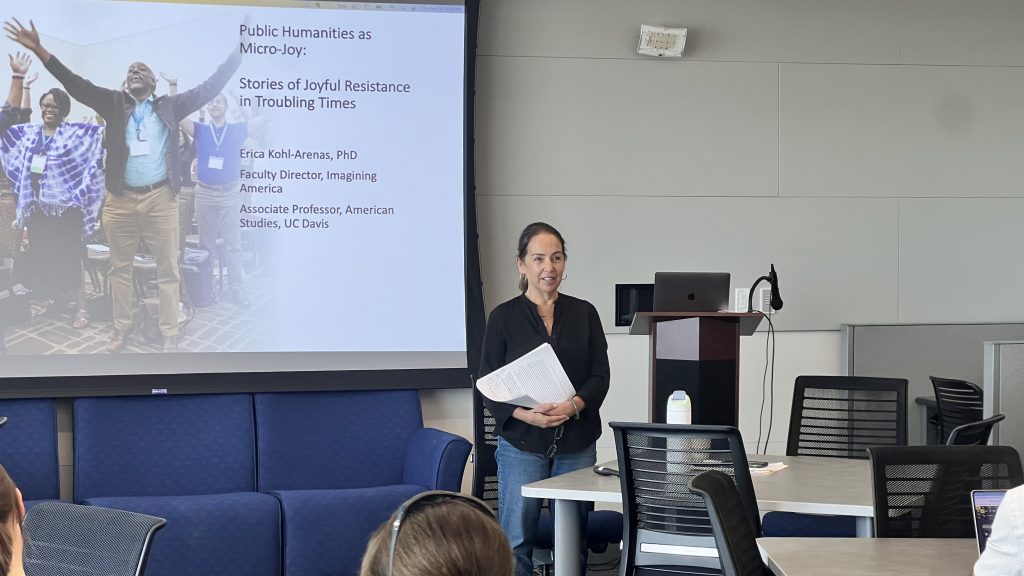
Susan Derwin, the director of the Interdisciplinary Humanities Center and professor of German and comparative literature at UC Santa Barbara, launched the boot camp and shared several of UCSB’s public humanities projects, including, “The Making of Monuments.”

Professor Susan Derwin offering reflections on monuments and the role of humanities in society.

In her project, she works with teachers from the Santa Barbara Unified School District to develop lesson plans that introduce students to the significance of historical memory and their role as caretakers of those memories and the public narratives surrounding them. According to Derwin, doing public humanities does not only mean spreading knowledge but also working with communities and valuing their cultures.

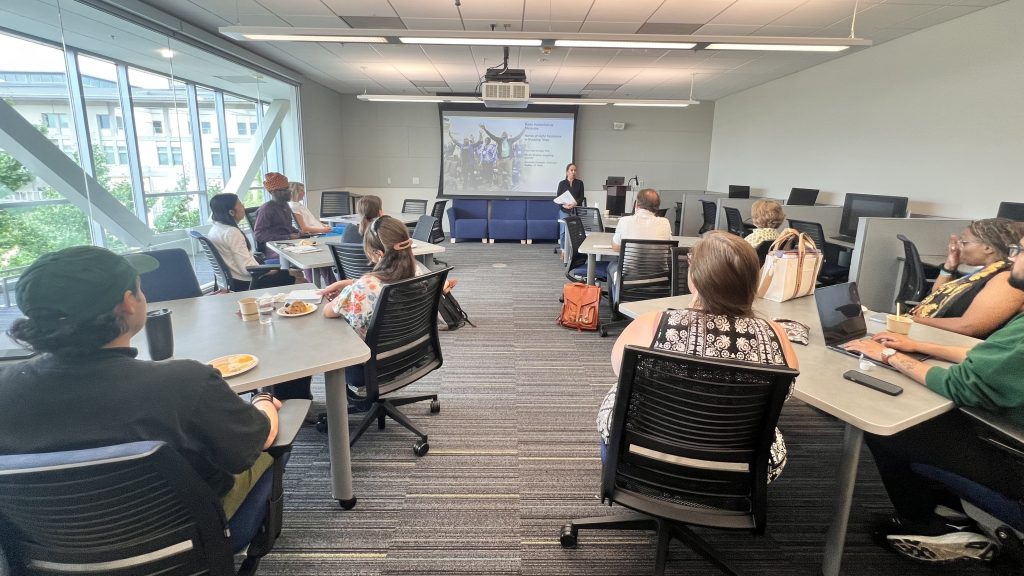
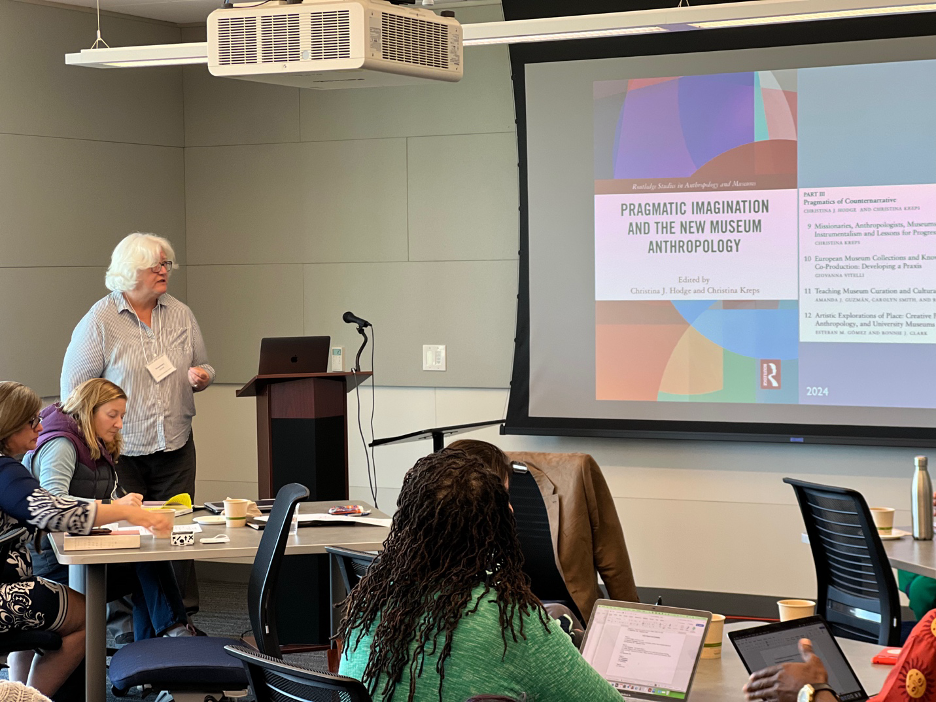
Next, Rosemary A. Joyce, Emeritus Professor of Anthropology and a former museum director at UC Berkeley presented, “Exhibition Curation and Cultural Equity: Lessons from Teaching and Practice.” She explained how museums can represent various voices, narratives, and histories. She expressed that museums do not only portray different communities’ stories but also ask the communities for an active engagement in presenting their own stories. She emphasized respecting the historical narratives and cultural objects of different communities. 

Rosemary A. Joyce highlighting the role of museums in amplifying community voices and fostering inclusive representation.

Rosemary emphasized the ethical responsibilities that museum exhibit curation and design should address. She said that a common mistake anthropologists make is speaking for communities rather than speaking with them, which leads to misrepresentation. She talked about the necessity for collaborative protocols that include community representatives in the decision-making process. She also stressed the need for flexibility in curatorial approaches, respect for culturally sensitive collections, and thoughtful consideration of language. She highlighted the issues of knowledge appropriation and the need to respect community-imposed restrictions on how cultural materials are displayed or interpreted.

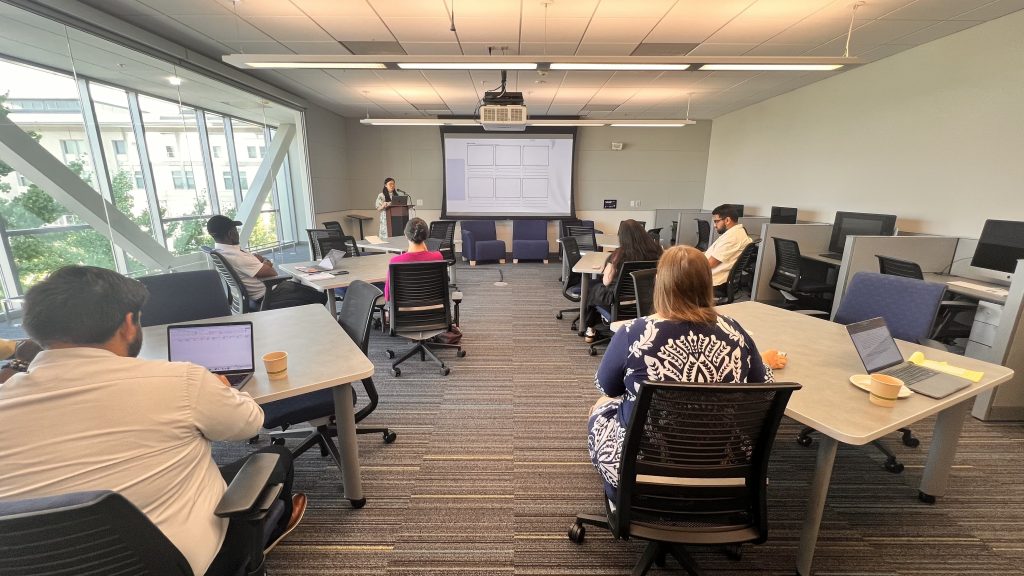
Later in the day, Professors Benjamin D. Weber and Ofelia Ortiz Cuevas from UC Davis along with Assistant Professor Marlene Mercado from California State University, San Marcos, shared their project titled, “Beyond the Barriers and Open Letters from Prison.” In this project, the aim is to publish artwork and writing from four prisons in California. This project helps many people to be heard while they are behind bars, people who might have been silenced for years. This project was a good example of how public humanities can assist in healing open wounds and seeking justice.

Professors Weber, Cuevas, and Mercado present Open Letters from Prison.

Finally, Robin DeLugan, professor of Anthropology at UC Merced, presented a summary about the history of UC Merced and its collaborations with local communities highlighting our Carnegie Classification for Community-Engaged Research and our Luce Foundation Grant. She explained how community-engaged research projects have helped faculty, staff, and graduate students to be connected with local communities.  At the end of this session, Christina Lux, the managing director of the Center for the Humanities at UC Merced, talked about the differences and similarities between public humanities and community-engaged research. 

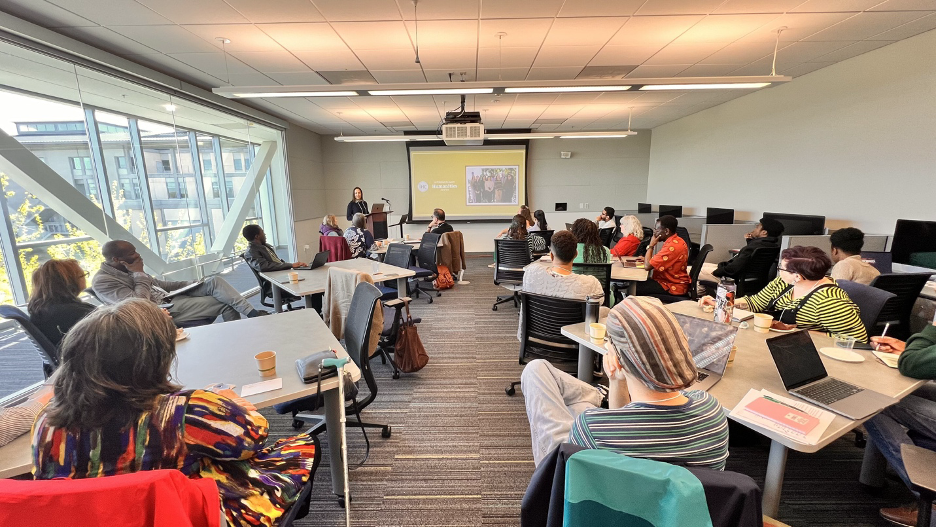
We ended the day by asking attendees to do a group activity, sharing their thoughts about public humanities and community-engaged research using a deck of “Public Scholar Conversation Cards” developed by Imagining America: Artists and Scholars in Public Life.

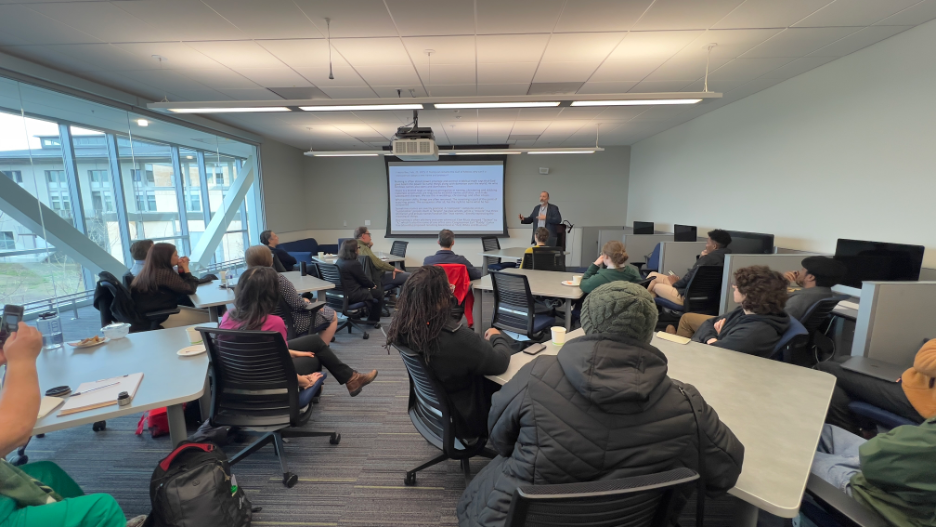
Boot Camp participants engage with the Public Scholar Conversation Cards during a group activity.

Lessons on Public Philosophy from Andrew Fiala

By Shiraz Noorani, Graduate Student Researcher, Center for the Humanities, UC Merced

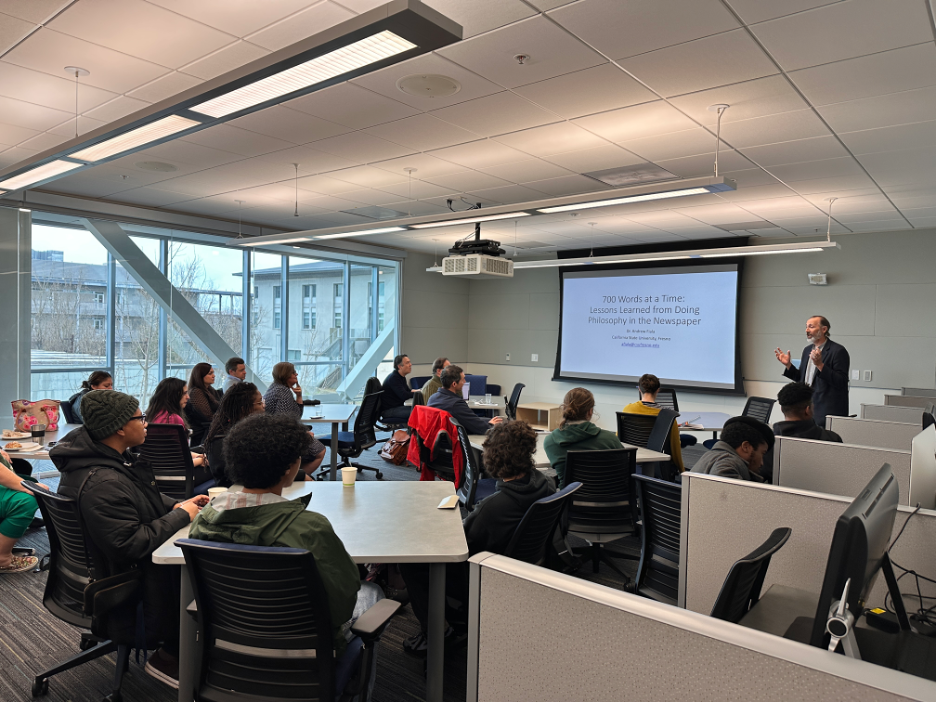
As part of our Public Humanities Speaker Series, Andrew Fiala, professor of philosophy and founding director of the Ethics Center at California State University, Fresno, gave his talk “700 Words at a Time: Lessons Learned from Doing Philosophy in the Newspaper, in our Public Humanities Design Studio at UC Merced last spring.

Professor Andrew Fiala Shares insights on public philosophy.

Professor Fiala has been practicing the art of public philosophy for many years. As a columnist with The Fresno Bee, he has written hundreds of columns on philosophy, ethics, and public discourse. His journey as a public philosopher has been motivating but challenging. Fiala’s talk was on how philosophy can be communicated to the masses through the media, via newspaper columns in particular. He spoke about how to condense and translate profound ethical and philosophical ideas into understandable columns that everyone can relate to.

Writing for a newspaper has helped Fiala learn to clarify complex ideas. He observed that public philosophy has to make people think and not react, and a good article should make people brainstorm, ask questions, and not just agree or disagree. He emphasized that the need for philosophical engagement is still strong, even as we move into a new era of technology. He feels that bringing philosophy to the public calls for passion, effort, and flexibility. Whether through blogs, newspapers, or social media, the task is to make philosophy applicable in everyday life.

Andrew Fiala reflects on making philosophy accessible through newspaper columns.

To illustrate the work of public philosophy further, Fiala gave some samples of his writings at The Fresno Bee, showing how he has dealt with ethical issues and philosophical questions in ways that ordinary readers can grasp, engaging with real world issues and promoting reflective conversation.

The talk was followed by a Q&A where Fiala discussed the challenge of moving philosophy into new media and emphasized the importance of keeping philosophical conversation relevant in a constantly changing world.

Public Humanities in Practice: Selected Annotated Case Studies

By Shiraz Noorani, Graduate Student Researcher, Center for the Humanities, UC Merced 

Crumme, Hannah Leah. “Building Community Archives: Vietnamese Portland.” The Routledge Companion to Public Humanities Scholarship. Routledge, 2024. 128-138.  https://www.taylorfrancis.com/chapters/edit/10.4324/9781003248125-10/building-community-archives-hannah-leah-crumm%C3%A9

In “Building Community Archives: Vietnamese Portland,” Hannah Leah Crumme describes an initiative of Lewis & Clark College’s Special Collections to broaden Portland, Oregon’s historical record by building a community-based digital archive regarding the Vietnamese American community. Recognizing that traditional archives are far too often centered on white settler histories, Crumme and her team wanted to document the diverse experiences that shape the city explicitly, especially those of Vietnamese immigrants and their descendants, in their contributions and struggles. It also represents an alarmingly underrepresented population in Portland. The project, launched in 2017, grew from the college’s initiative to create more inclusive collections to better represent Portland’s multicultural legacy. It has collaborated with community leaders, like Thao Tu, who is president of the Vietnamese Community of Oregon, for cultural sensitivity and authenticity by collecting oral history, photographs, and documents; often, translators have been used to capture stories in both languages, English and Vietnamese. For the most part, it has been grant-funded by institutions, including the National Endowment for the Humanities, allowing Crumme and her team to hire student workers and cultural consultants, as well as reach out to local Vietnamese groups via events such as the annual Tet Festival. It is an initiative that not only looks to preserve the heritage of Vietnamese Portlanders but also works to incorporate their stories into local education through materials for public school curricula and exhibitions in community spaces, broadening public understanding of the city’s historical landscape. 

Garcia-Medina, William. Making Black Public Humanities in South Florida: Fugitive Pedagogies, Self-Making, and Memory Work. Diss. University of Kansas, 2022. https://www.proquest.com/docview/2679773033?pq-origsite=gscholar&fromopenview=true&sourcetype=Dissertations%20&%20Theses

This dissertation by William Garcia-Medina gives a descriptive framework to understand the intersections of memory work with Black public humanities. He introduces theoretical methods underpinning the study of Black public humanities, including: fugitive pedagogy, a term that describes the educational practices Black educators have utilized to resist systemic oppression; and self-making, a concept that highlights the active ways in which Black individuals and communities shape their identities through cultural, intellectual, and political practices. These strategies are used in Black memory work, in the conservation and distribution of Black collective memory, and in making sure that histories are recorded and passed on through community-led initiatives.

Additionally, the dissertation discusses modern forms of public humanities within digital landscapes, demonstrating how the AARLCC embraces technology to expand its reach. It inspires further investigation into the ways digital platforms can magnify Black voices while staying rooted in local, community-based memory work. 

Hill, Cecily Erin, and Mariel Aquino. “Community Case Studies: How the Humanities Enrich Community Life.” National Humanities Alliance. https://nhalliance.org/wp-content/uploads/2024/05/NHA-COMMUNITY-CASE-STUDIES-OVERVIEW-2024.pdf

This document provides an in-depth exploration of how communities across the United States are utilizing the humanities to address societal challenges, preserve cultural heritage, and foster social equity. It showcases case studies from Nogales, Arizona; Rapid City, South Dakota; and Charleston, South Carolina, each illustrating how humanities-based initiatives are empowering local populations. Through partnerships with local organizations, these initiatives utilize history, storytelling, and cultural practices to address issues such as economic inequality, racial divisions, and environmental challenges. 

In Nogales, history and storytelling are used to reshape the narrative surrounding life on the U.S.-Mexico border, fostering a sense of pride and community resilience. In Rapid City, efforts focus on bridging divides between Native and non-Native populations through cultural recognition and historical research, leading to improved community trust and mental health outcomes. Charleston’s case study highlights initiatives aimed at confronting its legacy of slavery while promoting dialogue around the impacts of gentrification and climate change on African American communities. Together, these studies emphasize the vital role the humanities play in community-building and social progress. 

Ramirez, Mario H., and Lorena Gauthereau. “Documenting Transborder Latinidades.” The International Journal of Information, Diversity, and Inclusion 6.4 (2022): 1-7. https://www.jstor.org/stable/pdf/48720302.pdf?refreqid=fastly-default%3A83b2d3271332df2053e846c62e909d08&ab_segments=&initiator=&acceptTC=1   

The article “Documenting Transborder Latinidades” by Mario H. Ramirez and Lorena Gauthereau explores the dynamic relationship of archives, libraries, and digital humanities in the documentation of the lived experience of transborder Latinx communities. The authors have shown a rich history and identities formed across migrating journeys and colonial legacy.

This article underlines how community-based archives preserve and celebrate diverse histories formed with and within Latinx communities. These projects, in turn, collaboratively create an active form of memory-building participation among the archivists, academics, and people in these communities. This provides access on a wider scale and, consequently, allows self-identity and contributions of marginalized groups to have their voices heard at global and local levels. 

Shang, Haoyi. Telling Our Own Stories: An Analysis of Asian American Community Museums in the U.S. Diss. University of Pennsylvania, 2023. https://repository.upenn.edu/entities/publication/11d7eaaf-693d-4b62-bd01-ec9a24cbf358. 

This dissertation explores the importance of community museums in showcasing the stories of American communities from a cultural standpoint. The paper also highlights efforts to address the historical oversight of Asian American contributions in mainstream U.S. heritage narratives through case studies of three institutions: the Portland Chinatown Museum, the Wing Luke Museum in Seattle, and the National Cambodian Heritage Museum & Killing Fields Memorial in Chicago. The study delves into the significance of community museums in bridging history with shared memory and effectively involving the public in cultural engagement activities. Haoyi Shang touches upon the roles of museums as historical interpreters that support and safeguard local identities. Additionally, the dissertation explores the origins of these museums and their community-centric method of organizing exhibits to showcase a variety of narratives. 

Public Humanities: An Annotated Bibliography of Statements from Professional Associations and Organizations

By Shiraz Noorani, Graduate Student Researcher, Center for the Humanities, UC Merced 

This annotated bibliography is a compilation of guidelines and statements from various scholarly professional associations working in the field of Public Humanities. It was written with the aim to provide practitioners and scholars with a simple yet clear overview of how public humanities is practiced across disciplines. The sources annotated here delineate the ways that professional scholarly organizations engage communities through different initiatives. It also offers a foundation for understanding the role of public humanities in shaping more engaged, accessible, socially responsive academic work.     

“About the Field.” National Council on Public History, https://ncph.org/what-is-public-history/about-the-field/. Accessed 31 Oct. 2024. 

This webpage contains a comprehensive overview of public history, explains what public history is, and why it extends beyond academia. It explores how public history as a practice encompasses museums, archives, oral history, and historical consultancy. The source shows how public historians communicate with the public and share inclusive narratives. This is applicable to scholars who are involved in the process of outreach, collaboration, and public engagement in historical interpretation. More than that, this page indicates how public history can be part of community engagement and involvement; it introduces a set of guidance and training on how to be a Public Historian. The page also distinguishes between the understanding of public history and regular or traditional history and provides a robust definition of their distinctions.

Fisher, Daniel. “Goals of the Publicly Engaged Humanities.” Humanities for All. https://humanitiesforall.org/essays/goals-of-the-publicly-engaged-humanities. Accessed 17 Oct 2024. 

This document thoroughly explores the involvement of the public in humanities projects by delving into four real-life examples that highlight the collaborations between universities and local communities. These case studies from the Humanities for All database illustrate the advantages that arise from partnerships between institutions and different partners like K-12 schools and community organizations. They showcase activities such as safeguarding history records and developing educational materials while also fostering community leadership initiatives. This material is also useful for grasping how the humanities can forge ties between academia and the public domain as well as appreciating the role of such alliances in preserving culture and driving educational advancements.  

“For the Public.” Archaeological Institute of America, https://www.archaeological.org/programs/public/. Accessed 24 October 2024. 

“For the Public,” an initiative by the Archaeological Institute of America, demonstrates how archaeology is shared with the public through engaging activities, an element of public humanities practice. Their programs feature events like International Archaeology Day to encourage participation in activities and Interactive Digs that provide online access to real-time excavations. Moreover, the Site Preservation Program aims to protect archeological sites around the world by raising awareness, education, and outreach. With these programs, the American Archeological Institute not only fosters a deeper understanding of safeguarding future archeological heritage but also makes the past accessible to the public.

“Guidelines for Broadening the Definition of Historical Scholarship.” American Historical Association, 5 Jan. 2023, https://www.historians.org/resource/guidelines-for-broadening-the-definition-of-historical-scholarship/. Accessed 17 Oct. 2024. 

This American Historical Association document attempts to broaden the scope of scholarship, to include diverse forms other than books and articles, such as digital initiatives or a public history project, amongst others. It guides academics and organizations on how best to incorporate public humanities projects into their academic evaluations in the field of history. This page also offers a framework for reviewing traditional contributions by incorporating both examples of digital history and public history projects on different media platforms. It can thus be a helpful document for public historians and historians who are involved in public humanities projects in their attempts to correlate their work with established academic conventions. 

“Guidelines for Evaluating Publicly Engaged Humanities Scholarship in Language and Literature Programs.” Modern Language Association, August 2022. https://www.mla.org/content/download/187094/file/Guidelines-Evaluating-Public-Humanities.pdf.  

This document is a recommendation from the MLA’s Ad Hoc Committee for evaluating public humanities scholars in language and literature programs. The document emphasizes the ethical considerations in collaborating with communities, especially multilingual ones, and provides ways of evaluating projects that do not fit the conventional peer-review framework. The guidelines also explore the scope, impact, dissemination, collaboration, and deliverables of public humanities projects. 

This document also stresses the development of a system for rewarding faculty members for their work in the public humanities. It focuses on the effects of the projects on communities, the growth of the humanities, and the right approach to collaboration. It will be a significant and useful tool for institutions and departments looking to revise their faculty evaluation processes outside of conventional peer-reviewed publications. The guidelines also signify the need for diverse outputs of public humanities: podcasts, blogs, community reading groups, or exhibitions. It raises questions of ethics when working on community-based projects and suggests that the approach should be collaborative and non-extractive.  

Oliver, Younger. “Documenting the Impact of the Public Humanities in Higher Education: A Toolkit.” National Humanities Alliance, 2023. https://humanitiesforall.org/media/pages/resources/documenting-the-impact-of-the-public-humanities-in-higher-education-a-toolkit/58758ed5af-1689611837/impact-research-toolkit-final.pdf.

The toolkit offers a pathway to capturing the impacts of public humanities endeavors within higher education institutions. It describes helpful methods, including questionnaires, focus groups, and interviews, which can help practitioners understand the outcomes of their programs. In addition, it considers best practices in regard to ethics, inclusion, and the qualitative and quantitative data analysis that is critical for capturing program impacts related to public and community-based humanities work. The section on ethics and accessibility emphasizes the importance of protecting anonymity and advising on conducting research that respects participants’ backgrounds, as well as analyzing and using data one has collected to craft stories, showcasing the importance of public humanities work. 

“Public Education Programs.” American Anthropological Association, 9 June 2023, https://americananthro.org/learn-teach/public-education-programs/. Accessed 29 Oct. 2024.  

The American Anthropological Association’s webpage outlines its goals to promote public understanding of complex social issues through anthropological research. The webpage also emphasizes how these complex social issues are tackled through a multi-disciplinary approach, including science, history, and lived experience, in order to educate the public. Moreover, the AAA seeks to deal with social problems, including migration as well as racism, through projects like the RACE Project and World on the Move. These projects are funded by organizations like the Ford Foundation, the National Science Foundation, and the Wenner-Gren Foundation. This webpage aims to link scholarship and the public in a way that fosters a more profound and inclusive understanding of contemporary social problems.

“Public Engagement Programs.” American Academy of Religion, https://aarweb.org/AARMBR/Who-We-Are-/Public-Engagement-Programs.aspx. Accessed 17 Oct 2024. 

The webpage titled “Public Engagement Programs” outlines efforts by the American Academy of Religion to improve discussions about religion in the public sphere. The programs range from the American Lectures in the History of Religions, whose purpose is to stimulate scholarship in the history of religions, to the Public Scholars Project, which prepares scholars to be more effective public intellectuals in the study of religion. Other projects include the Religious Literacy Guidelines for College Graduates, which works to ensure religious literacy is integrated into undergraduate education, and the Guidelines for Teaching about Religions in K-12 Public Schools, which gives strategies for teaching religion in a constitutional and educationally sound way. The paper also acknowledges religious pluralism and public service by training chaplains through the Chaplaincy Program in order to accommodate religions in areas such as prisons and the military.  

It also covers the efforts towards combating Islamophobia by using a three-year project that trains educators on how to handle this kind of bias within classrooms. AAR/Luce Fellowships in Religion and International Affairs bring into view how religious scholarship is put into practice within secular government agencies to develop policies related to public health, human rights, and foreign affairs. The Levantine Refugee Project offers AAR members an opportunity to serve displaced Syrian and Iraqi populations, thereby humanizing the refugee crisis in the U.S. and bringing attention to the religious dimensions of that crisis. These efforts aim to link knowledge with discussions and policy decisions in the realm of religious studies for the benefit of public engagement and education. 

“Public Humanities Network.” Consortium of Humanities Centers and Institutes,  https://chcinetwork.org/networks/public-humanities-network. Accessed 29 Oct. 2024.  

This network intends to develop collaborations between academic institutions and civic communities. Topics they have included are defining “public humanities,” identifying the role of audiences, and establishing collaboration between academic institutions and the public. This network also shared its archive of recordings, which include videos like Conversation About the Black Studies Collaboratory; Public Humanities Mentoring Workshop; Public Humanities and Design Justice Workshop; Reckoning with Settler Colonialism and Imagining Just Futures Workshop; and How Do You Do Public Humanities? This network provides the necessary resources for both the scholar and the public to develop and implement robust and inclusive public humanities projects.

“Statement on Valuing Public Philosophy.” American Philosophical Association,  https://www.apaonline.org/page/publicphilosophy. Accessed 14 Oct. 2024.  

The American Philosophical Association, in this statement, explains its position on the value of philosophy and urges universities to acknowledge and appreciate philosophers who interact with non-academic people. The statement underscores the importance of philosophers getting involved in public discussions by linking ideas to real-world problems that may impact public policies. This statement emphasizes that public philosophy can take place in dialogue with other disciplines like humanities, arts, natural sciences, and social sciences. The APA also promotes the establishment of guidelines that acknowledge and adequately assess the impact of public philosophy on decisions regarding career advancement in academia. 

Wagner, Laura. “Taking Linguistics to the Public: An Outreach Guide.” Linguistic Society of America. https://www.lsadc.org/rc_files/12/Taking%20Linguistics%20to%20the%20Public_0.pdf. Accessed 16 Oct. 2024.

The Linguistic Society of America has created a guide to assist linguists in participating in public outreach endeavors by recommending engaging approaches such as partnering to host events with public institutions. For instance, mentoring programs with local high schools, collaborating with universities to organize a linguistics summer boot camp or hosting a booth at a university festival to reach audiences. The guide is significant for its focus on involving the community in raising awareness of linguistics in society. This document also provides strategies for effective public outreach, such as creating an engaged and trust-based space while working within a team. It also emphasizes understanding the background knowledge of the intended audience for public-facing events when choosing the type of activities or topics. 
Shakespeare On Site

by Dorie Perez

460284_10204246237937600_8913245388789599347_o
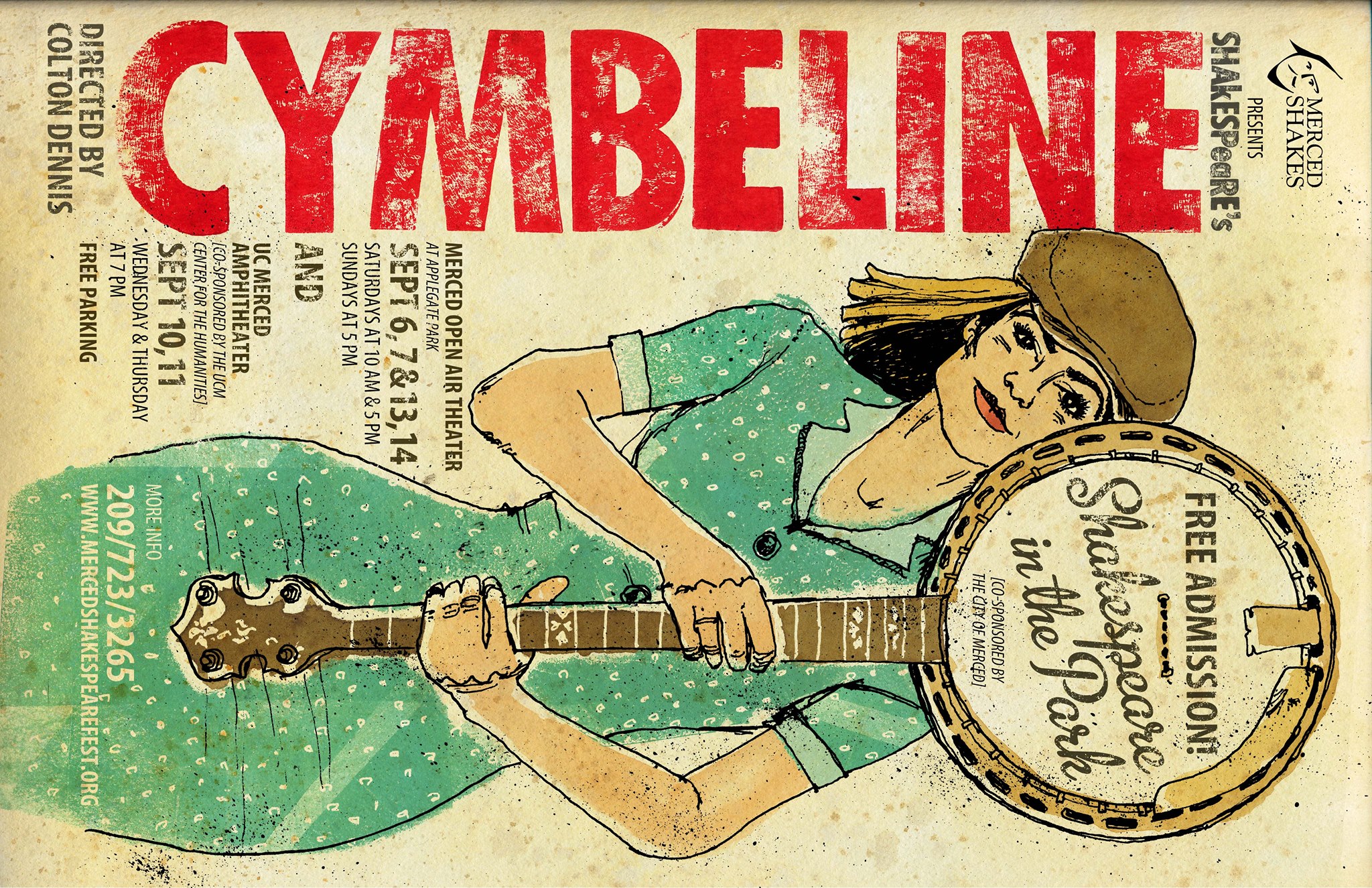
Shakespeare was coasting on his laurels when he wrote Cymbeline, one of his last works for the theater, and that wasn’t a bad thing. The literary great was sure to add all of his favorite elements to this dramatic work, weaving comic absurdity with historical narrative and familial strife that, happily, wraps up on a high note. Often overlooked, the play’s high energy and whackamole-style cast of characters cropping up at inopportune moments was showcased by the obvious love and attention taken by the local theater company, Merced ShakespeareFest, to put on the production and create collaborations with the local academic community. The Center for the Humanities at UC Merced played host to the Merced ShakespeareFest’s Fall 2014 production of Cymbeline; its disparate plot echoes the Center’s biennial research theme: “The World Upside Down: Topsy-Turvy.”

Hieke Hambey, Merced ShakespeareFest’s founder and executive director, introduced the play to over 100 audience members on the grounds of UC Merced’s new Wallace-Dutra outdoor amphitheater. This venture between both the local company and the University of California at Merced was the first of its kind, and the broader impact of such a partnership was visible. The play drew mixed audiences from both the larger community and the campus, filling the amphitheater for a full two-night’s run. The play, which continued its scheduled performances in Applegate Park the following weekend, centers on the lovers Imogen and Posthumus Leonatus, who are separated by royal decree and brought back together by farce. Musical interludes offered up by local musicians Evan Hall and Soheil Fatehiboroujeni added an unexpected twist, furthering the quirky take on classic Early Modern themes of mistaken identities, flexible gender presentation, ignoble monarchs and devious servants.

Dr. Katherine Steele Brokaw, assistant professor of literature at UC Merced, served as both the lead actress and dramaturg. Her love of Shakespeare and community theater rings clear: “I like the feeling of giving back to the community through working with Merced Shakespearefest and Merced County Opera in the Schools, both of which have benefited from Center for the Humanities grants.” This is the first time that the ShakespeareFest theater company has had part of their work shown on campus, and Steele Brokaw agrees that these types of community connections have a regional impact. “While there is much scholarly merit in these collaborations, I think that it is even more important that these collaborations are ensuring that the performing arts reach more undergraduates, graduates, faculty, staff, schoolchildren, and community members of all ages and backgrounds in the Central Valley than ever before.”