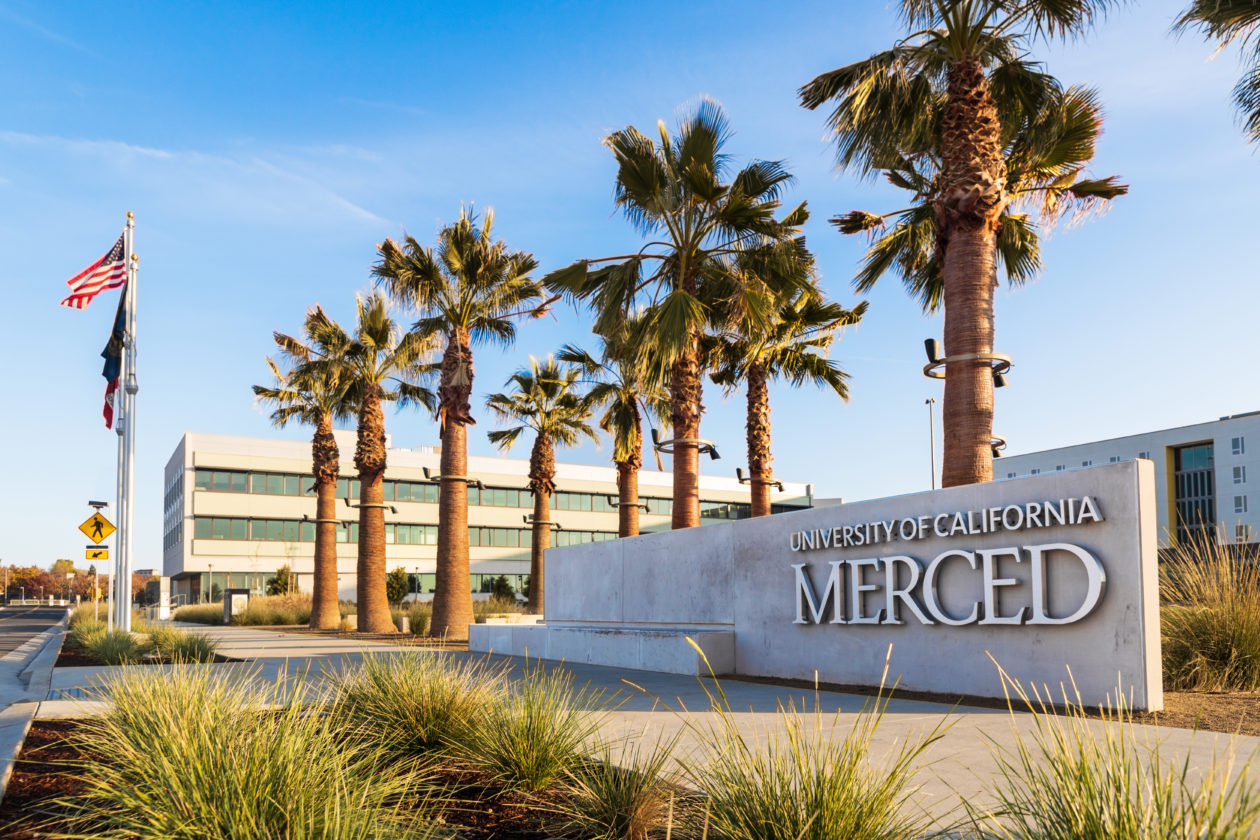
By: Josiah Beharry, Graduate Student Researcher, Center for Humanities, University of California Merced
Academic publishing operates within a persistent tension between disciplinary rigor and public relevance. Journals frequently prioritize methodological precision, theoretical density, and specialized language that can distance the very community that scholarship seeks to engage. Within this landscape, both Public Humanities (Cambridge University Press) and ENGAGE! Journal represent distinct yet overlapping efforts to reimagine how knowledge is produced, communicated, and mobilized. While both journals challenge traditional academic norms, they do so through different orientations—one emphasizing public discourse and cultural intervention, the other centering community partnership and participatory research. For graduate students navigating where to publish, these distinctions are critical.
Published by Cambridge University Press, Public Humanities represents a progressive, innovative, and pioneering development in fostering exemplary community engagement and the sharing of a cross-disciplinary epistemology. Marketed as “a space for scholars, students, activists, journalists, policymakers, professionals, practitioners, and non specialists,” the journal fundamentally questions who produces knowledge and who benefits from it. Similarly, ENGAGE! challenges conventional hierarchies of knowledge production, but does so by positioning community-engaged research and community based participatory research not as supplementary approaches, but as foundational to scholarship itself. Where Public Humanities expands the audience of academic work, ENGAGE! redefines the process through which that work is created.
As a nascent journal inaugurated in 2024, Public Humanities operates with flexibility, balancing the urgency of public-facing scholarship with the long-term demands of disciplinary rigor. Its mission—“to create a venue for sharing knowledge about the intersections of humanities scholarship and public life”—is reflected in its broad thematicscope, which includes Classics, Cultural Studies, Disability Studies, Ethnic Studies, Gender Studies, History, Law, and Linguistics. By contrast, ENGAGE!, established in 2019, reflects a slightly more developed but still evolving field of community-engaged scholarship, with a particular emphasis on urban contexts where structural inequality, policy experimentation, and cultural dynamism intersect. While Public Humanities casts a wide interdisciplinary net, ENGAGE! offers a more targeted focus grounded in place-based, community-centered inquiry.
Both journals share a deep commitment to accessibility, though they operationalize it differently. Public Humanities achieves accessibility through form and dissemination. Its open access model ensures that scholarship is not only publicly relevant but publicly available. Articles typically
range from 6,000 to 8,000 words and are structured with concise, engaging introductions and abstracts that foreground stakes, arguments, and public significance. The journal’s “Of the Moment” section, featuring shorter 1,000–2,000 word pieces, further demonstrates its responsiveness to contemporary issues, allowing scholars to intervene in real time cultural and political conversations.
In contrast, ENGAGE! prioritizes accessibility at the level of language and audience. Its editorial philosophy explicitly encourages clear, multilingual, and non-exclusionary writing, challenging the assumption that intellectual rigor requires jargon. This is reinforced through reviewer guidelines that emphasize clarity, usability, and relevance to both scholars and community stakeholders. For graduate students, this distinction is crucial: publishing in Public Humanities requires the ability to translate complex ideas for a broad public audience, while publishing in ENGAGE! demands an ability to communicate across academic and community contexts simultaneously.
The journals also diverge in their criteria for scholarly legitimacy. Public Humanities maintains more traditional academic structures, including anonymous double-blind peer review and an emphasis on well-sourced, theoretically grounded analysis. Its innovation lies in its subject matter and presentation. For example, Lisa D. Andres’s article on Taylor Swift demonstrates the journal’s willingness to engage with contemporary pop culture through rigorous analysis while incorporating multi-modal sources such as TikTok and Threads. This reflects a methodological openness that legitimizes digital culture and lived experience as sites of scholarly inquiry.
ENGAGE!, however, redefines rigor itself. Its reviewer guidelines prioritize the central involvement of community partners, shifting evaluation criteria from purely methodological soundness to relational ethics and community impact. The question is not only whether the research is rigorous, but whether it is accountable to the communities it represents. This is further exemplified in its calls for special issues, such as those addressing cancer disparities, which emphasize collaborative, action-oriented research that responds to real-world inequities. In this sense, ENGAGE! moves beyond representation toward intervention.
Methodologically, Public Humanities tends to favor interpretive, theoretical, and qualitative approaches rooted in cultural analysis, historical inquiry, and media studies. It excels in producing scholarship that is timely, interventionist, and engaged with public discourse. ENGAGE!, on the other hand, foregrounds community-based participatory methods,
emphasizing co-creation, applied research, and the integration of practice and scholarship. For graduate students, this distinction signals different expectations: Public Humanities is ideal for those seeking to translate disciplinary expertise into public-facing argument, while ENGAGE! is better suited for those conducting collaborative, community-embedded research.
Ultimately, both journals represent critical interventions in a publishing ecosystem still shaped by disciplinary silos and inaccessible discourse. Public Humanities works to dismantle the boundary between academia and the public by making scholarship timely, readable, and widely available. ENGAGE! works to dismantle the hierarchy between researcher and community by embedding collaboration into the very structure of knowledge production.
For emerging scholars, the choice between these journals is not simply about topic fit, but about orientation. Public Humanities asks: how can scholarship speak to the world?ENGAGE! asks: how can scholarship be produced with the world? Together, they signal a broader transformation in academic publishing—one that values accessibility, accountability, and relevance alongside rigor.
This is one in a series of five essays reviewing public humanities journals. This series was inspired by Wendy Belcher’s website Reviews of Peer-Reviewed Journals in the Humanities and Social Sciences